BIKOI MODEL
The 360-Approach: Advancing
Dental Care
The 360-approach to oral health care promotes the good health and well-being of people, recognizing that oral health is integral to overall health.
- The person is at the center of health care
2. There are several factors that affect a person’s health.
3. Oral health is connected to overall health
Patient Centered
The Bikoi Model places patients at the heart of oral health care, prioritizing their unique needs, preferences, and well-being to deliver personalized, compassionate, and high-quality dental care.
© Dr. Bikoi Foundation
Health Connection
The Bikoi Model recognizes the critical link between oral health and overall health, promoting the 360-approach to patient care .
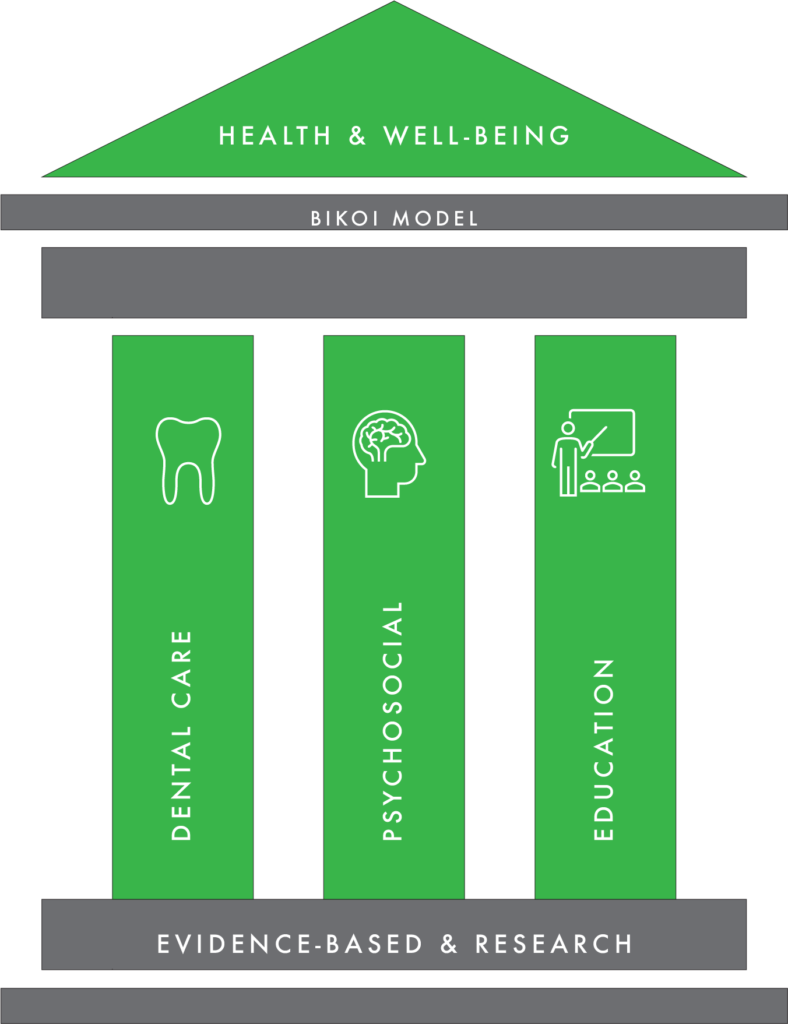
The Pillars of the Bikoi Model
& Good Oral Health
The 360-approach to oral health care promotes the good health and well-being of people, recognizing that oral health is integral to overall health.
Dental Care
Education
The education pillar of the Bikoi Model emphasizes oral health literacy and education to empower individuals in making informed decisions and adopting healthy behaviors. The model provides accessible resources, integrates oral health education into school-based programs, and collaborates with community partners to promote oral health literacy. It also advocates for strengthening oral health literacy training in dental curricula and interprofessional education to enhance collaboration between dental and medical providers. The education pillar targets efforts towards socially disadvantaged groups to promote oral health equity and reduce disparities, aligning with the WHO’s strategies for oral health promotion.